
 Miljan Radovanovic
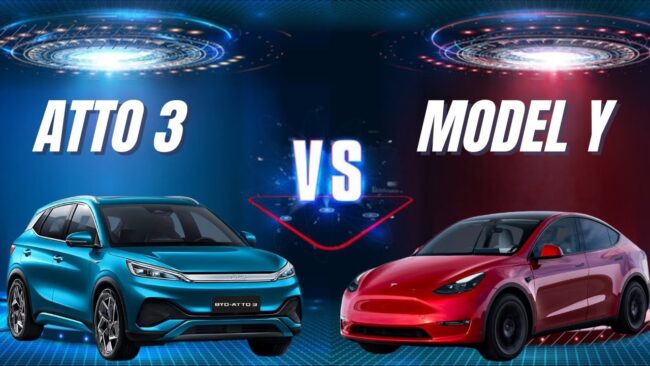
Buying an EV in 2026 is not as simple as choosing the newest car anymore. Plenty of buyers are now comparing brand new Chinese EVs with slightly older Teslas because the numbers finally overlap. The new BYD Atto 3 EVO sits in a price range that often matches a used Tesla Model Y, especially in Australia and New Zealand.
Both make sense for different reasons. One gives you a fresh warranty and newer battery hardware. The other gives you more space, stronger software, and a charging network that still matters for long distance driving.
Quick comparison: BYD Atto 3 EVO Vs Used Tesla Model Y
The gap between these two cars is smaller than many buyers expect. The Atto 3 EVO improved substantially with its updated platform, larger battery, and faster charging support. Tesla still holds advantages in charging convenience, cabin space, and software maturity.
|
Feature |
New BYD Atto 3 EVO |
Used Tesla Model Y |
|
Typical 2026 Buying Advantage |
Full factory warranty and fresh battery |
Larger vehicle with stronger resale history |
|
Vehicle Size |
Compact SUV |
Mid size SUV |
|
Boot Space |
Around 490L plus 101L front trunk |
Up to 854L cargo space |
|
Battery Type |
LFP Blade Battery |
Mostly NMC depending on model year |
|
Charging Speed |
Up to 220kW DC charging |
Excellent Supercharger integration |
|
Ride Comfort |
Softer and city friendly |
Firmer but more stable at highway speeds |
|
Interior Style |
Traditional EV layout with more physical familiarity |
Minimalist cabin with screen focused controls |
|
Software Experience |
Improved but still developing |
Industry leading OTA updates and navigation |
|
Best For |
Lower ownership risk and urban use |
Road trips and family practicality |
|
Main Concern |
Long term resale still evolving |
Used vehicle wear and reduced warranty coverage |
The interesting part about this comparison is that the cars target slightly different buyers, yet many shoppers still end up choosing between them.
The Atto 3 EVO is newer, smaller, and easier on the budget. The used Model Y still carries strong demand because Tesla built a reputation around charging convenience and software reliability.
Buyers watching Australian car sales have also noticed that used EV pricing changed quickly during the last two years.
A used Model Y can now cost close to a high spec Atto 3 EVO, which makes the decision less about badge prestige and more about ownership priorities.
Cabin Space And Daily Practicality
The size difference becomes obvious the moment you sit in both vehicles. The Tesla Model Y is simply larger.
Rear passengers get more legroom, the boot is significantly bigger, and the cabin feels more open overall.
Several comparisons place the Model Y near 850 litres of cargo space while the Atto 3 stays closer to the compact SUV category.
| Feature | BYD Atto 3 EVO | Used Tesla Model Y |
| Vehicle Type | Compact SUV | Mid size SUV |
| Boot Space | Around 490L | Up to 854L |
| Seating Feel | Upright and compact | More spacious rear seating |
| City Driving | Easier to park | Larger turning footprint |
The Atto 3 still works well for smaller families or urban drivers. Parking is easier, visibility is good, and the softer suspension suits rough city roads better than the firmer Tesla setup.
Important: Families doing frequent airport runs or road trips usually notice the extra cargo room in the Model Y within the first month of ownership.
Battery Technology And Charging Experience
This section matters more in 2026 than many buyers expect. Battery chemistry changes how the car behaves over time, especially if you plan to keep it for several years.
The Atto 3 EVO uses BYD’s Blade Battery system with LFP chemistry, which has built a strong reputation for durability and thermal safety.
Owners also like the fact that regular 100 percent charging is generally less stressful for LFP batteries compared with older NMC setups.
Tesla still wins on charging infrastructure in many regions. The Supercharger network remains one of the easiest public charging systems to use, especially during long highway trips. That advantage becomes important for people who drive interstate regularly.
The newer Atto 3 EVO improves charging speeds substantially with updated architecture and faster DC charging support.
Still, the overall charging experience often depends more on local infrastructure than raw charging numbers.
Did You Know?
Tesla owners often choose the car partly because route planning and charger integration happen automatically through the navigation system. That convenience still separates Tesla from most mainstream EV brands.
Interior Technology And Software
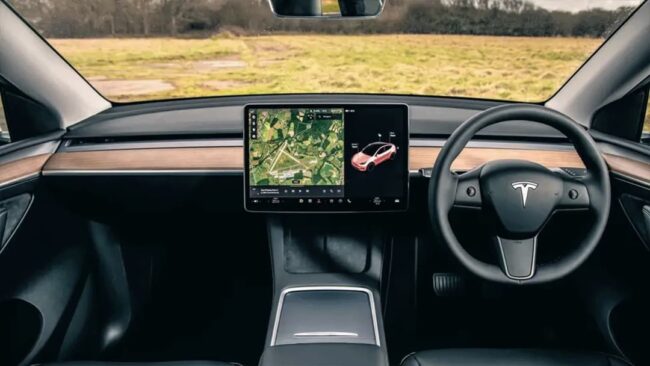
Tesla approaches software like a tech company. BYD approaches it more like a traditional carmaker trying to modernize quickly. That difference shapes the ownership experience every day.
The Model Y still feels cleaner and faster from a software perspective. Menus respond quickly, over the air updates arrive regularly, and the navigation system remains one of the strongest built in systems available. Tesla also continues to lead in app integration and remote vehicle controls.
BYD takes a more familiar approach. The rotating touchscreen, Apple CarPlay support, and physical cabin styling make the Atto 3 easier for first time EV buyers to adapt to.
Some drivers actually prefer that. Tesla’s minimalist interior can feel too stripped back for buyers moving from conventional SUVs.
The Atto 3 EVO also improves hardware compared with older BYD models:
- Larger infotainment display
- Better suspension setup
- Updated battery platform
- Improved power output
Those upgrades help the EVO version feel more mature than earlier Atto 3 models.
Warranty, Reliability, And Ownership Risk
A brand new EV always removes one major concern: uncertainty.
That is the biggest advantage the Atto 3 EVO holds in this comparison. Buyers receive a full factory warranty, fresh battery condition, and zero wear from previous ownership. BYD warranty coverage also tends to exceed Tesla’s standard vehicle warranty in several markets.
A used Model Y depends heavily on age, mileage, and previous charging habits. Some used examples remain excellent. Others may already show cabin wear or suspension fatigue after years of daily driving.
Reddit ownership discussions also reflect mixed experiences. Some owners praise Tesla’s software while others complain about cabin rattles and build consistency after several years.
The safer choice financially usually looks like this:
- New Atto 3 EVO for long-term ownership certainty
- Used Model Y for buyers prioritizing practicality and charging access
Which One Holds Value Better In 2026?
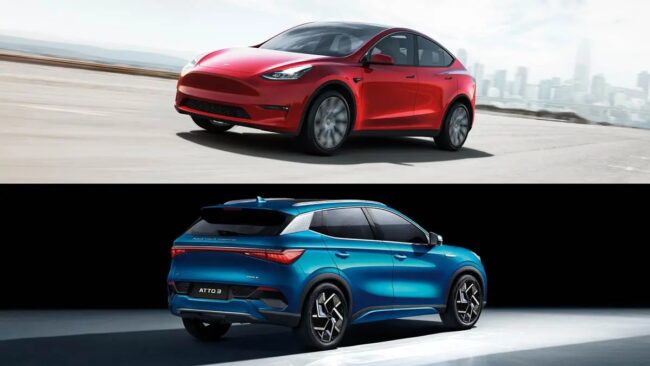
Tesla still performs better in resale value overall. Brand recognition matters, and the Model Y remains one of the most recognizable EVs globally. That helps demand in the used market.
BYD is improving quickly, but depreciation is still harder to predict because the company expands so aggressively across global markets. Rapid pricing changes can affect used values faster than with Tesla.
At the same time, some buyers no longer want older Teslas once warranty coverage starts shrinking. That creates an opening for newer BYD vehicles with full support coverage and updated hardware.
The smarter buy depends on how long you plan to keep the car:
- Shorter ownership: used Model Y often makes more sense
- Long ownership with lower risk: Atto 3 EVO is easier to justify
Final Perspective
The new BYD Atto 3 EVO gives buyers a safer financial starting point. You get a fresh battery, modern hardware, strong warranty coverage, and lower upfront risk. For daily commuting and city driving, it does almost everything most families need.
The used Tesla Model Y still feels more complete for drivers covering long distances regularly. Cabin space, charging convenience, and resale confidence remain real advantages.
Neither choice is objectively wrong in 2026. The better value comes down to how you actually drive, charge, and plan to keep the vehicle long term.